Go out early, these mornings, and look at the grass: it is wearing pearls.
Through the night the air has cooled enough for the moisture to settle in fine drops that catch the first light and seem to whiten the ground.
This very simple phenomenon has given its name to one of the loveliest breaths of the year; 白露 Báilù, the “White Dew”, which runs from 8 to 22 September.
The name of a morning
Bái (白) is white; lù (露), the dew.
The name says exactly what the eye observes: the nights have cooled, the gap between the still warm day and the early morning has widened, and the water vapor condenses at the level of the grasses into pale droplets.
In the symbolism of the five Phases, this white is no accident: it is the color of Metal (金 Jīn), the one that governs autumn, clarity and dry coolness.
The dew of Báilù is like a signature laid down each dawn on the landscape.
The tipping towards dry air
Báilù marks a real turning point.
The muggy summer moves off for good; the air turns clearer, keener, and soon drier.
The days may stay bright and mild, this is the famous late season; but the evenings already call for a shawl, and the windows are closed earlier.
The tradition read in this tipping an invitation to cover up in the evening, to shield the nape and the shoulders from the first cool drafts, and to tune one’s rhythm to the more inward one of the declining light.
The fan is put away; the teapot comes back out.
The three pentads of Báilù
The old calendar divides each breath into three pentads of five days, each summed up by a sign taken from nature.
For Báilù, these images all speak of departure and foresight: “the wild geese go away” towards the south, “the swallows return” to their winter quarters, “the birds lay in their stores”.
Everything in the landscape is preparing for the withdrawal: one stores, one migrates, one anticipates the cold season.
Our autumn gestures; filling the jars, bringing out the woolens, making up the tea reserve; do no more than take up, at human height, that wisdom the birds are putting to work above our heads.
Sweetness of the season
To a season that dries out, the art of living replies with sweetness and mellowness.
This is the moment of ripe fruit and dried fruit, of warm compotes, of amber infusions prepared without haste.
Classical dietetics likes, at Báilù, the flavors that are sweet and a little juicy; those that “give back” water to the table rather than hardening it.
Nothing complicated: a handful of dried fruit in a bowl, a round infusion in the morning, the slowness found again in a tea one watches steeping.
It is also the season of warm rituals; trembling water poured over a few fruits, a teapot kept within reach, the preference given to the enveloping warm over the icy of summer.
So many small habits which, without seeming to, give the everyday back its grain of slowness.
Worth discovering
Three autumn sweetnesses do honor to this breath.
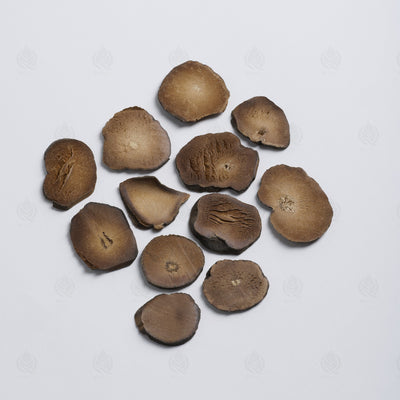
Red mandarin peel (outer layer) - 橘红 (Ju Hong),... gives an amber infusion of a deep natural sweetness, perfect for the mornings that turn cool; one in trembling water, and the cup sweetens itself.
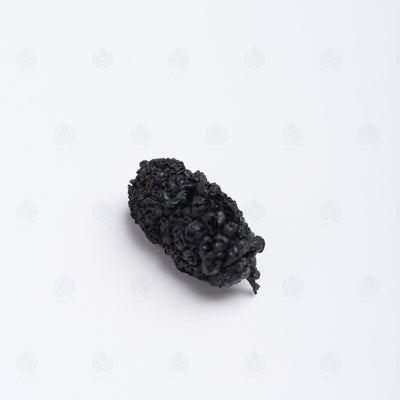
Dried mulberries (White mulberry) - 桑椹子 (Sang Shen Zi), small berries of a dark purple, of a sweet and slightly tart flavor: to nibble as they are or to let swell in hot water, they bring the season a fruity, velvety note.
A syrup not to be missed for this season: Nin Jiom Pei Pa Koa - 川贝枇杷膏 (Chuan Bei Pi Pa Gao), which nurtures Metal and Yin.
The dew is only a beginning.
As September goes on, day and night will walk towards their perfect equality: that will be the equinox, 秋分 Qiūfēn, the breath of sorting and of gathering inward.
Until then, it is good to set an autumn table...