There is one morning, every year, when you feel that something has turned.
The light falls lower and more slanting, the air has lost the mugginess of August for a new sharpness, almost cutting on waking.
Sounds carry further, the outlines of the world seem redrawn with a fine pen.
The Chinese tradition has a word for this clarity as it settles in: it calls it Metal, and makes of it the breath of the whole of autumn.
Metal, the clarity that sorts
In the grammar of the five Phases (五行 Wǔ Xíng), Metal (金 Jīn) is not a matter but a gesture.
After the expansion of the Fire of summer and the slow ripening of Earth at the close of the hot season comes the time of luminous contraction: the one that draws in, orders and brings back down.
Nature itself sets about sorting; the leaves let go, the sap withdraws towards the roots, the inessential falls and the essential is kept.
The harvests are brought in, the granaries are put in order, the load is lightened before the great withdrawal of winter.
Metal is that intelligence of less: to keep little, but to keep rightly.
White, pungent, dryness
To this Phase the tradition attaches a whole procession of correspondences.
A color first, white: that of the morning mists, of the flesh of pears and radishes, of the frost still far off.
A flavor, the pungent (辛 xīn), that of ginger, of the new onion, of the lively herbs that wake the palate and “open” towards the outside.
A climate, dryness (燥 zào): the autumn air turns clear and dry, what the texts prettily name the “limpid dry” (清燥 qīng zào).
And a symbolic organ, the Lung; to be heard not as a target but as one square of this table of correspondences, the one that links the breath, the skin, the voice and the rhythm of the season.
A poetic map of the living world, never a set of instructions.
Sweetness, at the hour of dry air
When the air dries out, the art of living in autumn holds in one word: sweetness.
Not sugar, but that tender and slightly mellow quality that classical dietetics places among the sweet flavors; ripe fruit, melting gourds, silky purées, dried fruit that keeps within it the honey of summer.
The table is moistened rather than hardened: clear soups, compotes, morning congees, warm infusions held in both hands while the day comes up.
And the gesture slows, for autumn is also the season of gathering inward: one comes home a little, one sorts one’s thoughts as nature sorts its leaves, one makes room.
The inner autumn
Metal has more than correspondences of the kitchen, it also has its color of soul.
The tradition associates an emotion with autumn; a gentle gravity, made of nostalgia and lucidity, the one that rises as the days shorten and one watches the leaves fall.
Far from being a weight, this limpid melancholy is the sensitive side of the sorting: one takes stock of the year, one lets go of what must go, one comes back to the essential.
The lettered of old made of it a season of writing and of walking, notebook in pocket, at the hour when the light grazes the hills.
To welcome autumn is also to welcome that slight gathering inward, without seeking to flee it.
Worth discovering
Three counter companions accompany this entry into the season.
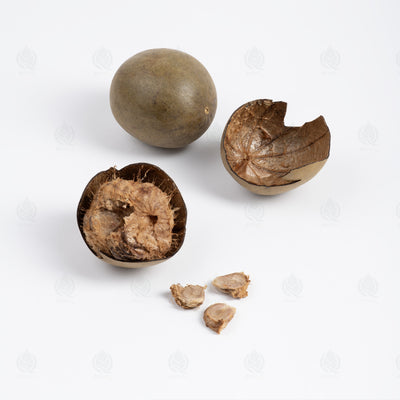
Monk fruit - 罗汉果 (Luo Han Guo), a small brown sphere from the hills of Guangxi, offers a round and ample sweetness that comes from nothing added: one or two in trembling water are enough to tint the infusion with amber.
Black tea with mandarin peel - 陈皮红茶 (Hong Cha Chen Pi), which weds the warmth of a red tea to patiently aged citrus peel...
A fragrant, enveloping cup, cut out for the mornings that turn cool.
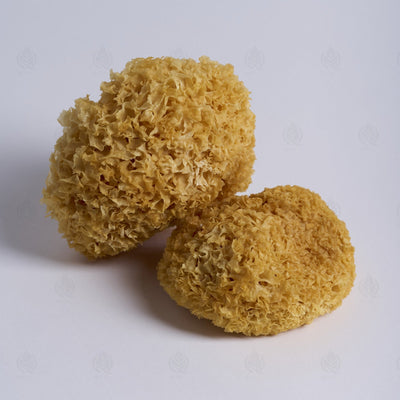
White tremella (Snow fungus) - 银耳 (Yin Er), which blends in perfectly by adding Yin.
Autumn, though, is only announcing itself.
In a few days the first dews will come to whiten the dawn and give their name to the first breath of the season: 白露 (Báilù), the White Dew.
It is towards that morning that we will go next.