The kitchen, in September, changes its smell.
The bright scents of summer give way to rounder aromas: compotes simmering, dried fruit swelling, steaming bowls held in both hands.
The autumn table has a logic of its own, inherited from a long tradition of seasonal dietetics; and that logic holds entirely in one quality: mellowness.
The sweet flavor, thread of the season
In autumn the air turns clear and dry; the table, for its part, replies with sweetness and unctuousness.
Classical dietetics places among the sweet flavors (甘 gān) everything that is tender, ripe, a little juicy; gourds, pears, sweet potatoes, dried fruit, melting grains.
The plate is moistened instead of hardened: clear soups, long-simmered congees, warm compotes, smooth purées.
It is a cooking of patience, which gives foods the time to grow tender and to “give back” their water.
That sweetness has nothing cloying about it: it is the natural roundness of a ripe food, the tender note that tempers the edge of the dry air.
It is looked for in the melting pear, the roasted pumpkin, the chestnut, the glutinous rice: it is offset with a touch of the pungent, a little ginger, a citrus zest; so as to keep the whole its autumn liveliness.
The larder of dried fruit
Autumn is the season of jars.
On the shelf stand the fruits that summer has concentrated by drying: they keep within them the honey of the fine days and slip in everywhere; into a morning bowl, an infusion, a warm dessert.
The dark berries bring the fruitiness, the pale flesh the roundness.
A few are enough to scent trembling water or to punctuate a congee with their sweetness.
It is the simplest way of inviting the season to the table: without a recipe, almost without a gesture.
The ancients kept in this way, in earthenware jars, enough to last until spring.
We no longer have the necessity, but the pleasure remains; that of opening a jar in October and finding there, intact, a little of the light of August.
White and the deep notes
The autumn palette plays on whites; pear, radish, lotus root, almond; but it also loves the dark, unctuous counterpoints that give a dish its depth.
A spoonful of black sesame paste on a bowl of rice, a few toasted seeds on a compote, and the table gains in depth what it loses in summer lightness.
Autumn is that poise: the clarity of white and the sweetness of the low notes.
The bowl of congee
If one dish had to stand for the autumn table, it would be congee (粥 zhōu), that rice cooked at length in a great deal of water until it becomes a silky porridge.
It has been eaten for millennia in China, at breakfast above all, and it fits the season wonderfully: warm, tender, moist.
It welcomes anything one wishes to slip into it: a handful of dried fruit, a few seeds, a thread of sesame.
It is prepared without haste, shared with the family, varied endlessly.
Autumn congee is sweetness made everyday: nothing spectacular, all comfort.
Worth discovering
Three companions for setting this table.
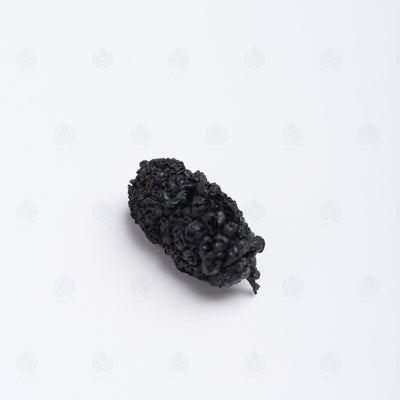
Dried mulberries (White mulberry) - 桑椹子 (Sang Shen Zi), dark purple berries, sweet and slightly tart, to nibble or to let swell in hot water.
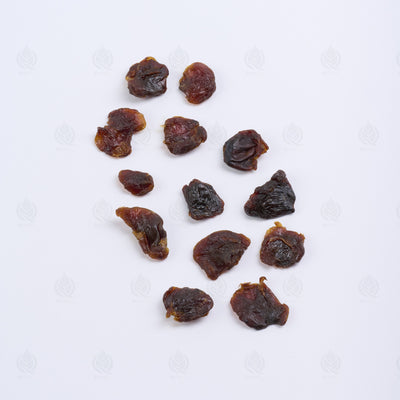
Dried longan - 龙眼肉 (Long Yan Rou), small amber and translucent flesh with a taste of smoked honey, to be added to an infusion or a congee for a comforting sweetness.
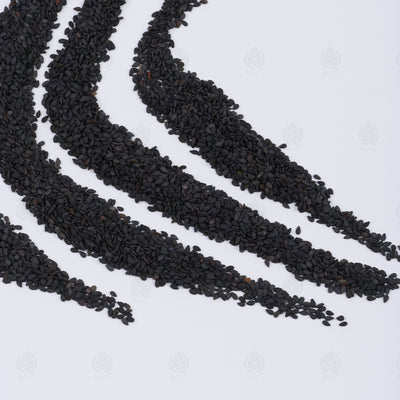
And Black sesame - 黑芝麻 (Hei Zhi Ma), glossy and fragrant, as a paste or as toasted seeds, which brings the table its deepest and most unctuous note.
A table that is sweet, mellow, unhurried: this is autumn served.
It remains to choose the right moment to sit down to it; and the calendar soon offers a choice one, the equinox of 秋分 Qiūfēn, where day and night become perfectly equal.