

Turmeric


Turmeric
姜黄Jiang Huang·Curcuma
Curcumae Longae Rhizoma
- Specialist suppliers based in France
- Dispatched within 24/48h, packed to order
- Kept away from light and moisture

Curcuma 薑黃
Curcuma longa
Wu Qijun, Zhiwu mingshi tukao, 1848
According to the classical texts
活血行气 通经止痛
Pinyin
Huo Xue Xing Qi · Tong Jing Zhi Tong
Overview
The rhizome of Curcuma longa, a plant of the ginger family grown in India, in south-east China and throughout tropical Asia.
Lifted in autumn, washed, briefly boiled, dried then ground to give the familiar intense yellow-orange powder, a natural colouring, but also a fundamental culinary spice (curry, garam masala, Thai dishes) and a major matter of the Ayurvedic and Chinese pharmacopoeias.
Its brilliant colour comes from curcumin, the natural pigment that gives it its characteristic hue.
To be distinguished from Yu Jin (Curcuma aromatica or C. wenyujin), which is the lateral secondary tuber, of a different profile.
Traditional uses
The reference herb for moving the Blood and the Qi through the median sphere and the Wood Phase.
Traditionally used for constitutions of stagnant Blood with a share of blocked Qi, particularly when this shows as discomfort on the right side of the trunk or as tension in the sides.
Also to free the passage through the meridians in the case of wandering discomforts.
Preparation and traditional-use quantity
- Decoction: 3 to 4 g, simmer for 25 minutes
- Everyday cooking: a fundamental spice of curry, of golden milk, and of Indian and Thai simmered dishes
- Ayurvedic golden milk: 1 tsp of turmeric + hot plant milk + black pepper + honey
- Distinction from Yu Jin: Jiang Huang (the main rhizome): Warm, sets things moving; Yu Jin (the lateral tuber): Cool, clearing, not to be confused
Precautions
Naturally contains curcumin. Not recommended for children, adolescents, or women who are pregnant or breastfeeding. Do not exceed the quantity of use indicated.
Classical incompatibility with Ding Xiang (clove).
In the same family


Red jujube (Chinese date)
大枣 · Da Zao
3,17 €


Aged mandarin peel
陈皮 · Chen Pi
From 6,50 €


Chinese hawthorn fruits
山楂 · Shan Zha
5,67 €

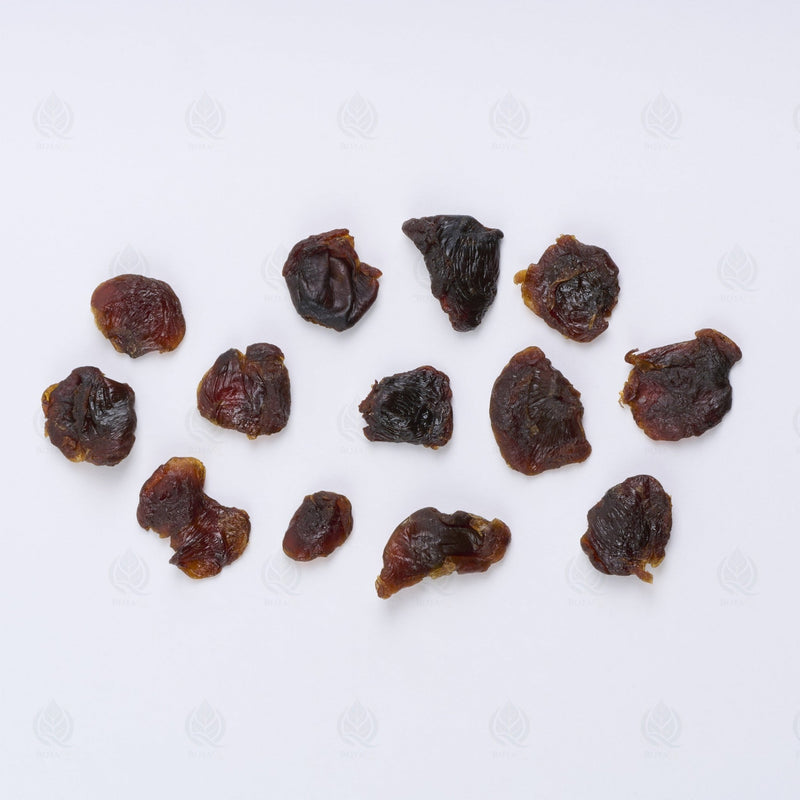

Dried longan
龙眼肉 · Long Yan Rou
7,50 €