

Black tea with mandarin peel


Black Tea with Aged Tangerine Peel
陈皮红茶Hong Cha Chen Pi·Thé noir à l’écorce de Mandarine
Camellia sinensis + Citri Reticulatae Pericarpium
- Specialist suppliers based in France
- Dispatched within 24/48h, packed to order
- Kept away from light and moisture

Earth Phase 土
Ziziphus jujuba
Wu Qijun, Zhiwu mingshi tukao, 1848
According to the classical texts
暖胃消食 行气化痰
Pinyin
Nuan Wei Xiao Shi · Xing Qi Hua Tan
Overview
A refined traditional Cantonese preparation: black tea (Hong Cha, fully oxidised, to be distinguished from Western “black tea”, which corresponds rather to Chinese Pu Er) is placed inside a hollowed-out mandarin peel (Chen Pi), and the whole is then dried together over several years.
The scent of the aged mandarin gradually permeates the tea leaves, creating an infusion of remarkable complexity: the warm, full-bodied side of black tea married to the aromatic sweetness of the mandarin peel.
Each piece is a small mandarin “ball” stuffed with tea. A speciality of Xinhui (Guangdong), a region renowned for the quality of its mandarins.
Ingredients: black tea (Camellia sinensis), mandarin peel (Citrus reticulata).
Traditional uses
A composed preparation joining what black tea does (warming the median sphere, of the transformation register) to what Chen Pi does (moving the Qi and transforming Phlegm-Dampness).
Traditionally used as a daily infusion for constitutions where transformation (Yun Hua) slows and Dampness weighs on the median sphere, or simply as an infusion for pleasure after the meal. A Cantonese speciality much enjoyed in winter.
Preparation and traditional-use quantity
- Traditional preparation: 1 piece (a mandarin stuffed with tea) in a large teapot (500 ml), water at 95°C, 3 to 5 minutes for the first infusion
- Multiple re-infusions: can be re-infused 5 to 7 times, lengthening the time slightly
- The cold season: especially enjoyed in autumn and winter for its warming turn
- A Xinhui speciality: the Chen Pi of Xinhui (Guangdong) is held to be the finest for this preparation
Precautions
To be used in moderation in cases of deficient with marked dryness or of settled heat.
In the same family


Red jujube (Chinese date)
大枣 · Da Zao
3,17 €


Aged mandarin peel
陈皮 · Chen Pi
From 6,50 €


Chinese hawthorn fruits
山楂 · Shan Zha
5,67 €

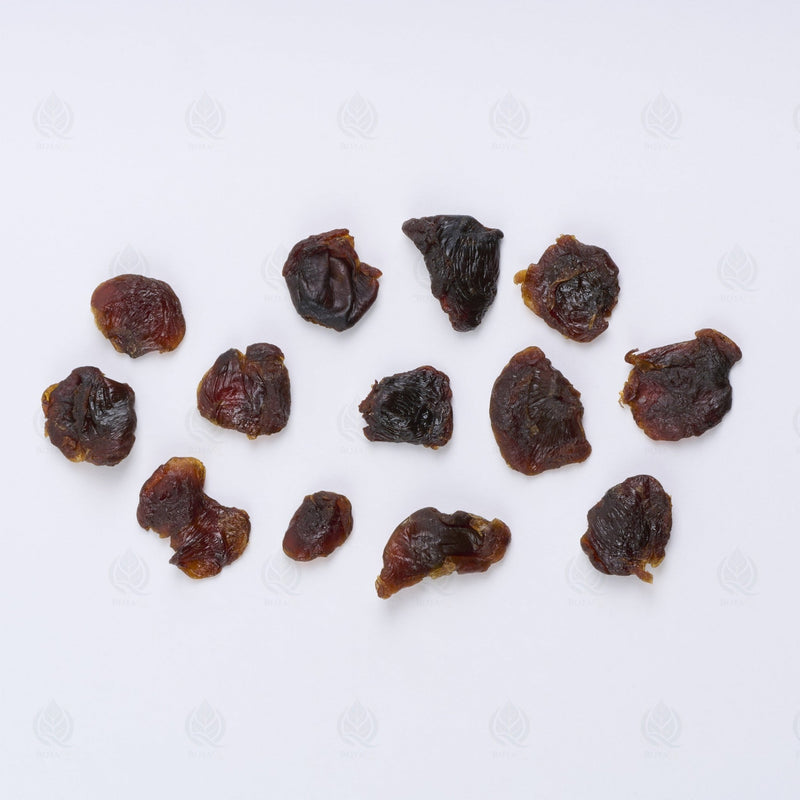

Dried longan
龙眼肉 · Long Yan Rou
7,50 €