

Long Jing green tea


Dragon Well Green Tea
龙井茶Long Jing Cha·Thé vert Long Jing
Camellia sinensis var. sinensis
- Specialist suppliers based in France
- Dispatched within 24/48h, packed to order
- Kept away from light and moisture

Earth Phase 土
Ziziphus jujuba
Wu Qijun, Zhiwu mingshi tukao, 1848
According to the classical texts
清头目 除烦渴 化痰消食 利尿解毒
Pinyin
Qing Tou Mu · Chu Fan Ke · Hua Tan Xiao Shi · Li Niao Jie Du
Overview
Long Jing (“Dragon Well”) is one of the ten most celebrated teas of China and has featured regularly at the head of the imperial rankings since the Qing dynasty.
It is grown exclusively in the misty hills that surround West Lake (Xi Hu) at Hangzhou, in Zhejiang province.
Its flat, smooth leaves, of a characteristic jade green, are pan-fired by hand in cast-iron woks according to an ancestral method that gives them their particular “brush” shape and releases their scent of toasted almond and chestnut.
Picked before the Qingming festival (early April), the “pre-Qingming” grade is the most sought after.
A plant-food of thousand-year-old tradition, on the border of the tea of pleasure, of the orthodox pharmacopoeia and of Chinese art.
Traditional uses
An unoxidised green tea, of Cool nature. Traditionally used to clear heat gently, to quiet a heated Spirit, and within the register of the clarity of the Spirit (Shen).
Particularly valued by scholars and Buddhist monks for its association with the quiet of study.
A mild and approachable action, suited to daily use (in moderation).
Preparation and traditional-use quantity
- Traditional Long Jing method: 3 to 5 g in a clear glass (the method known as “Bo Li Bei Pao”), water at 80°C (never boiling: water that is too hot “burns” the tender leaves), 2 to 3 minutes for the first infusion
- Re-infusions: can be re-infused 3 to 4 times, lengthening each infusion slightly
- Characteristic taste: notes of toasted almond and fresh chestnut, with a slightly umami finish
- Pre-Qingming vs post-Qingming: leaves picked before Qingming (4 April) are the most prized, more tender, more fragrant
Precautions
To be used in moderation in cases of deficient Yang with deep cold (its cool nature can add to it).
Keep it to earlier in the day if you are sensitive to caffeine.
In the same family

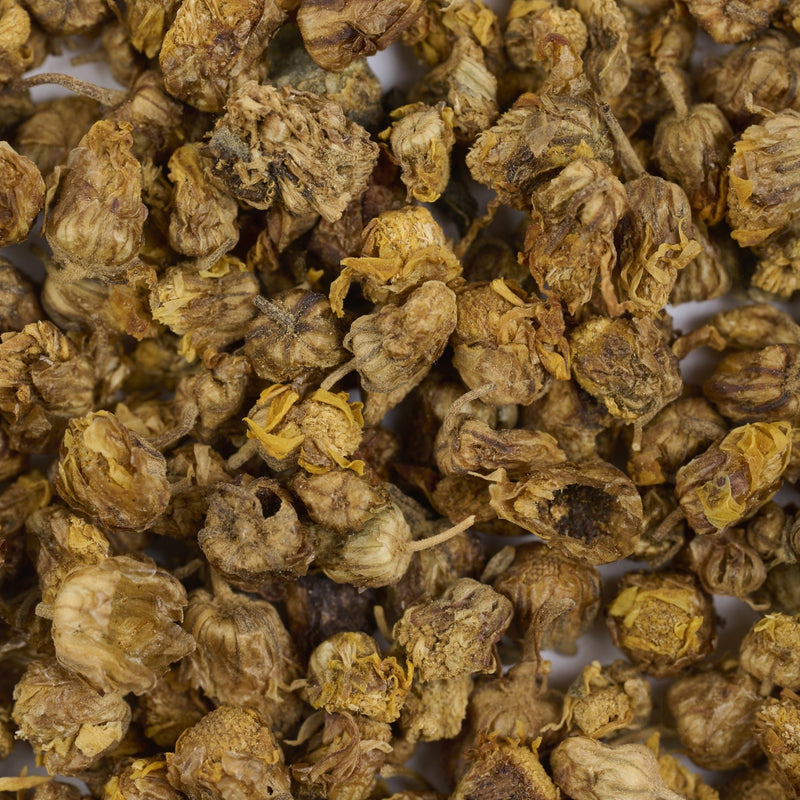

Wild chrysanthemum buds
野菊花 · Ye Ju Hua
6,50 €
Lotus Lightness Infusion
轻荷 · Qing He
4,83 €

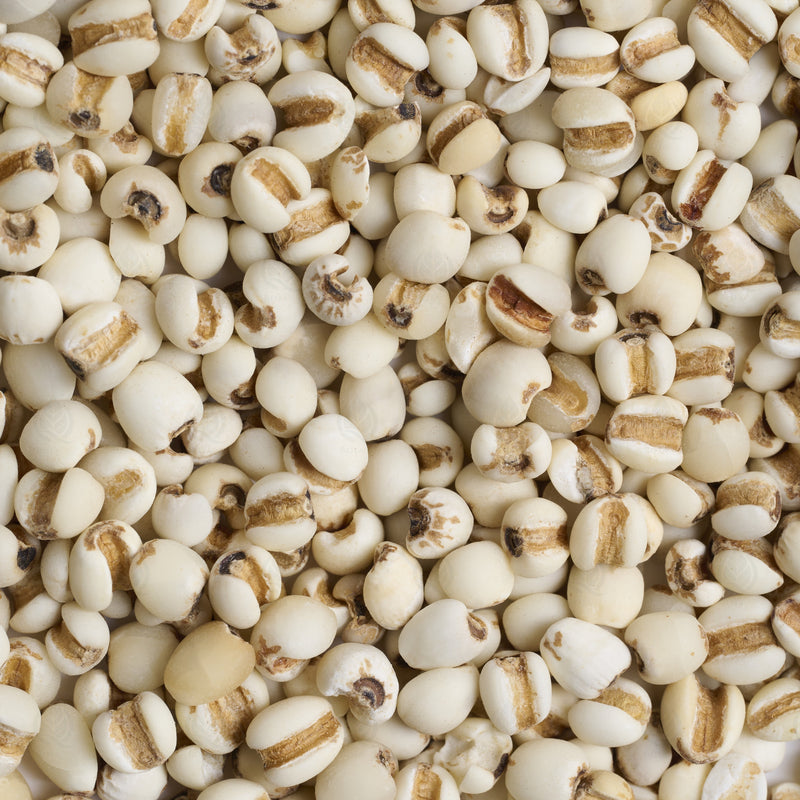

Job’s tears (Coix)
薏苡仁 · Yi Yi Ren
3,33 €


Fermented soybeans
淡豆豉 · Dan Dou Chi
5,83 €