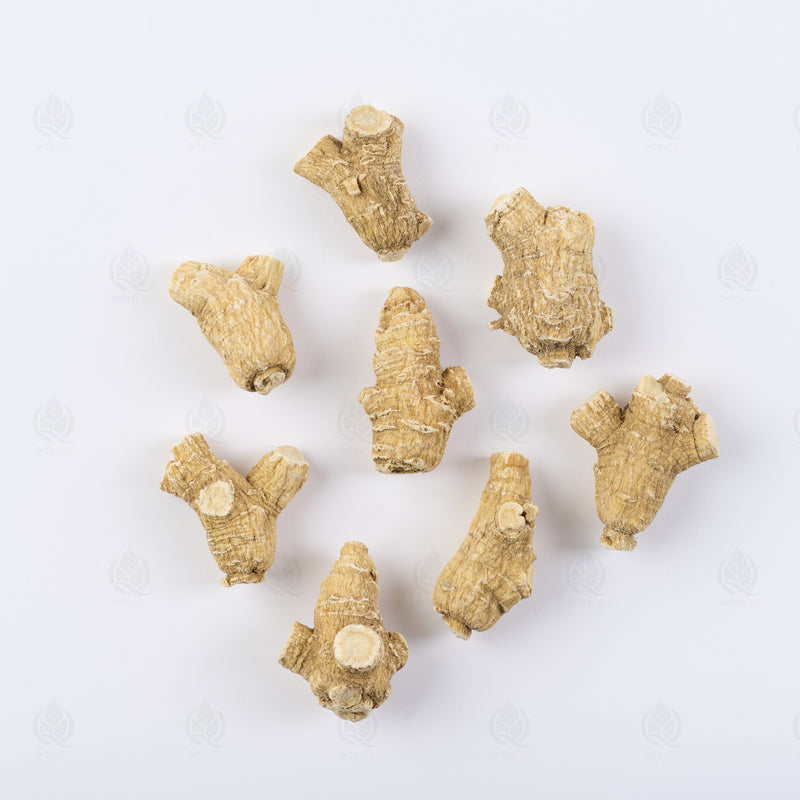
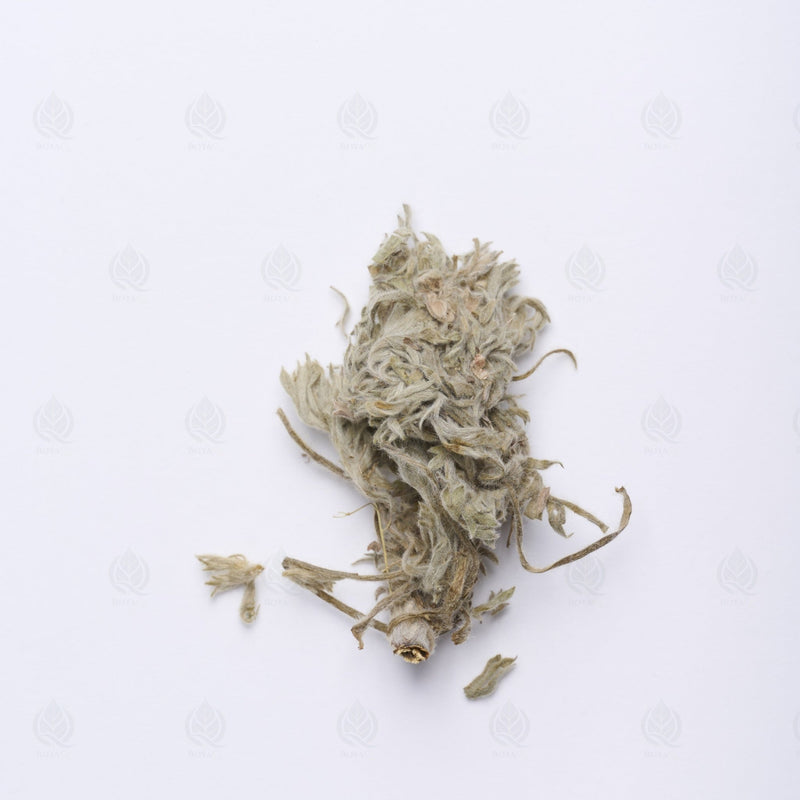
Peony root bark - 牡丹皮 (Mu Dan Pi)

Tree Peony Root Bark
牡丹皮
Mu Dan Pi·Écorce de racine de Pivoine
Moutan Cortex
- Traced and verified origin
- Dispatched within 24/48h, packed to order
- Kept away from light and moisture
According to the classical texts
清热凉血 活血散瘀 退虚热
Pinyin
Qing Re Liang Xue · Huo Xue San Yu · Tui Xu Re
Overview
The root bark of Paeonia suffruticosa, the majestic tree peony, a symbol of prosperity in Chinese culture.
Gathered from specimens of four to five years, the bark is delicately parted from the woody pith, dried in the shade, then cut into rolled straps.
It gives off a characteristic scent recalling paeonol, its principal aromatic compound.
Traditional uses
Distinct from the peony root (Bai Shao and Chi Shao), Mu Dan Pi is turned specifically towards the cooling of a heated Blood and the dissolving of heat stagnation.
Traditionally used for constitutions of heat in the Blood showing in vivid signs, and for the empty heats the tradition ties to a deficient .
Preparation and traditional-use quantity
- Decoction: 6 to 12 g, simmer for 25 minutes
- Liu Wei Di Huang Wan: the major blend of the Water Yin, of which Mu Dan Pi is one of the six components, there to carry off empty Heat
- Gui Zhi Fu Ling Wan: a classic blend for stagnation in women
Precautions
In the same family


Black Pearl
桑椹茶 · Sang Shen Cha
4,83€