

Agastache


Patchouli / Agastache
藿香Huo Xiang
Pogostemonis Herba
- Specialist suppliers based in France
- Dispatched within 24/48h, packed to order
- Kept away from light and moisture

Agastache 藿香
Agastache rugosa
Wu Qijun, Zhiwu mingshi tukao, 1848
According to the classical texts
化湿解暑 和中止呕
Pinyin
Hua Shi Jie Shu · He Zhong Zhi Ou
Overview
The aerial part of Pogostemon cablin (the patchouli of the pharmacopoeia, to be distinguished from the perfumer’s patchouli) or of Agastache rugosa, aromatic labiates grown in southern China.
Harvested in summer when the essential oils are at their peak, dried in the shade to preserve the volatile aromatics, it comes as tufts of quadrangular stems with entire leaves and small purplish flowers.
Its balsamic, mentholated scent is immediately recognisable.
Traditional uses
The foremost herb of the summer season in the Chinese pharmacopoeia. Traditionally used to transform Dampness and release the surface when it is clogged by summer damp: constitutions of damp summer heat, when Dampness weighs on the median sphere and hampers transformation (Yun Hua).
Also valued for its aromatic action, which “wakes” a mired Earth Phase.
Preparation and traditional-use quantity
- Short decoction: 3 to 9 g, to be added at the end of cooking (10 minutes), as the essential oils are volatile
- Huo Xiang Zheng Qi San: “the powder that puts the correct Qi back in order”, a classic summer blend for summer Dampness with heaviness of the middle region
- Summer infusion: 5 to 8 g in a large cup, water at a simmer, 10 minutes covered
Precautions
To be avoided in cases of deficient with dryness or of settled heat from emptiness.
Otherwise a herb particularly suited to damp summers.
In the same family

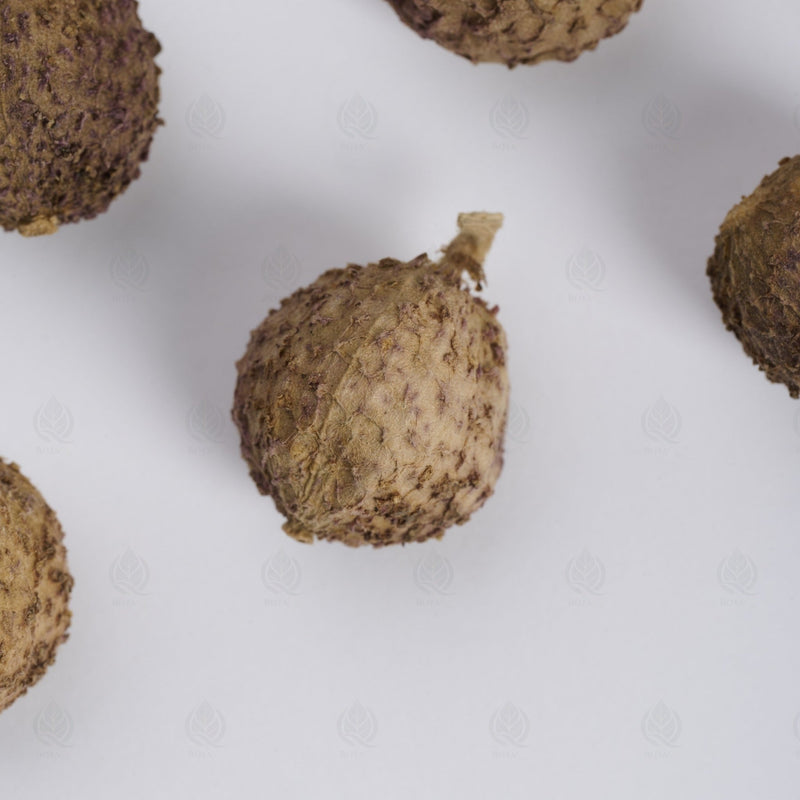

Amomum fruits
砂仁 · Sha Ren
7,50 €