

Chinese cinnamon bark


Cassia Bark
肉桂Rou Gui·Écorce de Cannelle de Chine
Cinnamomi Cortex
- Specialist suppliers based in France
- Dispatched within 24/48h, packed to order
- Kept away from light and moisture

Cannelier de Chine 桂
Cinnamomum cassia
Wu Qijun, Zhiwu mingshi tukao, 1848
According to the classical texts
补火助阳 引火归元 散寒止痛 温通经脉
Pinyin
Bu Huo Zhu Yang · Yin Huo Gui Yuan · San Han Zhi Tong · Wen Tong Jing Mai
Overview
Rou Gui is the thick, coarse bark of Cinnamomum cassia, to be carefully distinguished from Gui Zhi (the young twigs of the same species, of a different profile).
Taken from trees of at least six years, dried then rolled into “cigars”, it gives off a deep, warm cinnamon scent.
Its quality is judged by its thickness, by its intense reddish colour and by its sweet-pungent taste.
Traditional uses
One of the most powerful herbs for warming the depths. Traditionally used within the register of the “Fire of the Gate of Life” (Ming Men), to warm the Water Phase in its Yang foundations, and to give the Qi and the Blood their even course again in very cold constitutions.
Preparation and traditional-use quantity
- Very short decoction: 1 to 2 g, to be added at the very end of cooking (5 minutes) or infused directly
- Powder: 1 to 2 g, the method preferred for keeping the essential oils
- Jin Gui Shen Qi Wan: a classic blend with Fu Zi, of the register that supplements the Water Yang
- Gui Zhi distinction: Gui Zhi (the twigs) releases the surface, Rou Gui (the bark) warms the depths, not to be confused
Precautions
Naturally contains coumarin. Not recommended for children, adolescents, or women who are pregnant or breastfeeding. Do not exceed the quantity of use indicated.
A very hot herb: strictly inadvisable in cases of settled heat, of deeply deficient , of bleeding linked to heat. Classical antagonism with Chi Shi Zhi. Ask a practitioner for advice.
In the same family


Dried ginger
干姜 · Gan Jiang
6,50 €

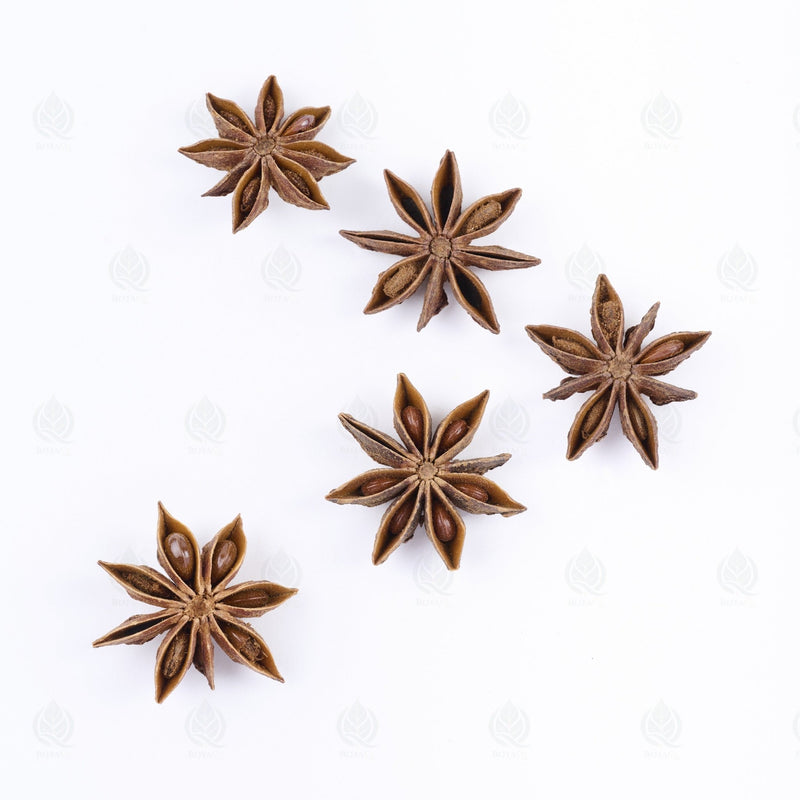
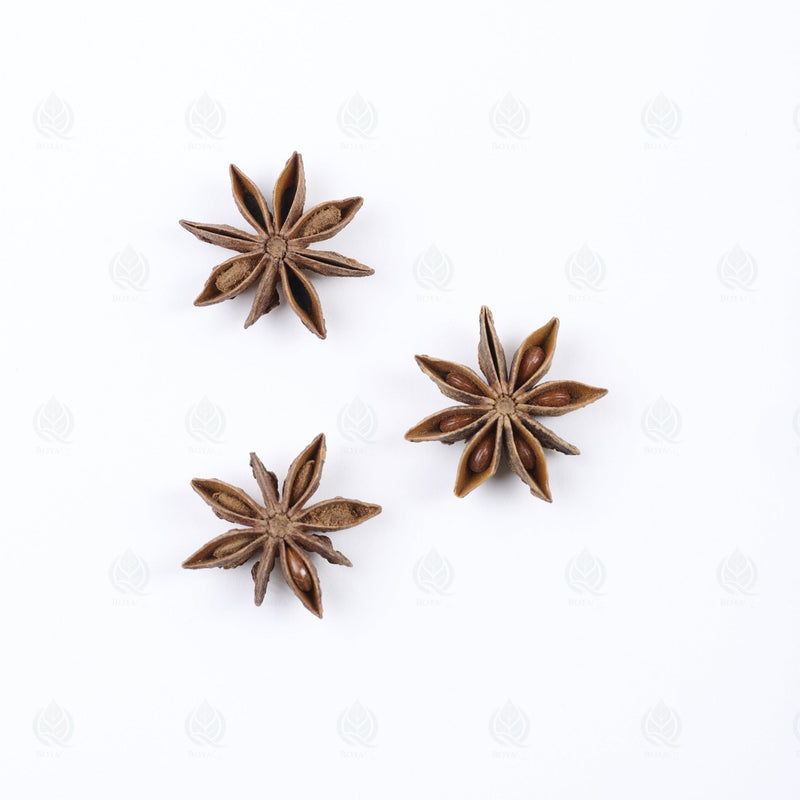

Star anise
八角 · Ba Jiao
3,33 €

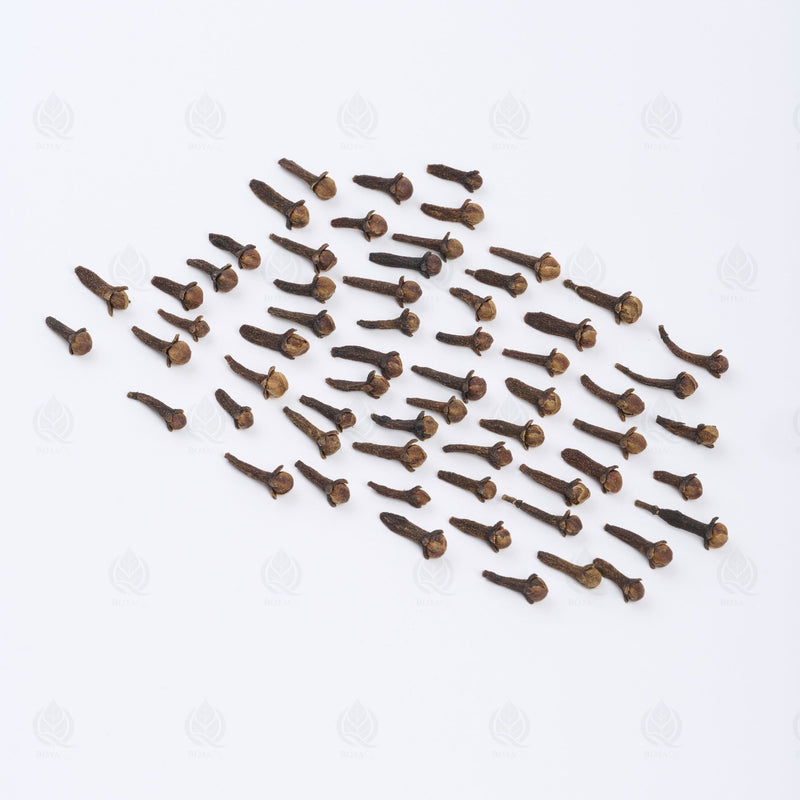
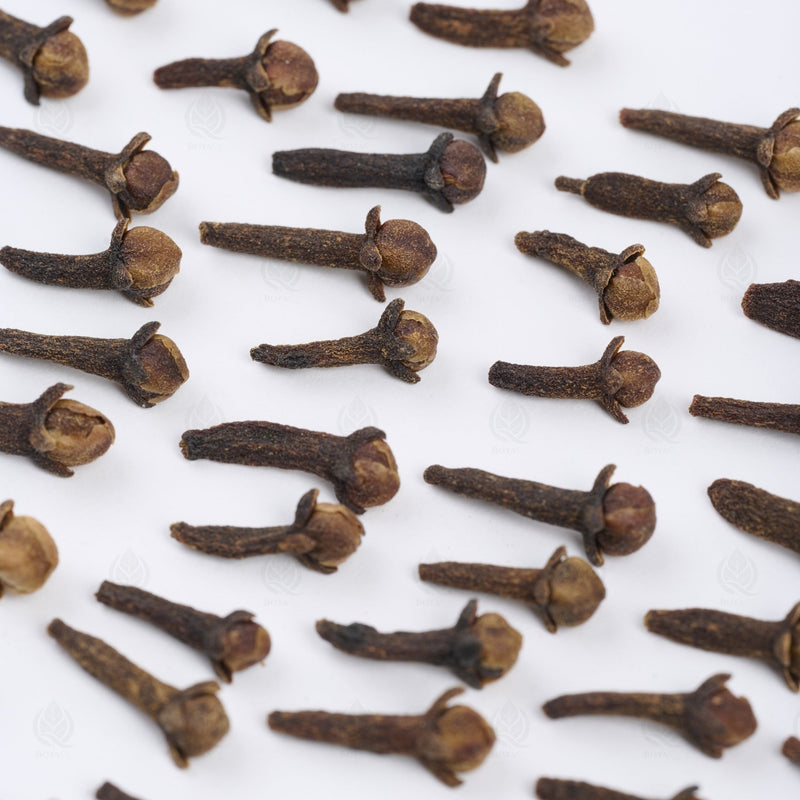

Clove
丁香 · Ding Xiang
3,33 €


Sichuan pepper
花椒 · Hua Jiao
6,67 €