

Plantain seeds


Plantain Seed
车前子Che Qian Zi·Graines de Plantain
Plantaginis Semen
- Specialist suppliers based in France
- Dispatched within 24/48h, packed to order
- Kept away from light and moisture

Plantain d'Asie 車前
Plantago asiatica
Wu Qijun, Zhiwu mingshi tukao, 1848
According to the classical texts
利尿通淋 渗湿止泻 清肝明目 清肺化痰
Pinyin
Li Niao Tong Lin · Shen Shi Zhi Xie · Qing Gan Ming Mu · Qing Fei Hua Tan
Overview
The minute brownish-black seeds of Plantago asiatica or Plantago depressa, separated from the plant by threshing in autumn.
To be distinguished from the aerial parts (Che Qian Cao), with which they share a kinship in the texts but also subtle differences.
Very small seeds with a large mucilage: the pharmacopoeia traditionally encloses them in a bag (Bao Jian) to make their use in decoction easier.
Traditional uses
The same orientations as Che Qian Cao, but with a stronger action on the freeing of the fluids where Heat-Dampness has settled in the lower region.
Traditionally used for constitutions of fluid retention with a share of heat, or for constitutions of Dampness that come with a descending movement scattering through an excess of Dampness (paradoxically, as the Dampness is carried off, the descending movement steadies).
Preparation and traditional-use quantity
- Decoction: 5 to 10 g, to be wrapped in a muslin bag (Bao Jian), as the seeds are very small and laden with mucilage
- Companion to Che Qian Cao: the two are often used together, to deepen the freeing of the fluids
- With Ze Xie: a classic pairing for freeing the fluids of the lower region
Precautions
To be avoided in cases of deficient Yang with deep cold or of deficient without Dampness.
For delicate constitutions, the milder Che Qian Cao is preferable.
In the same family

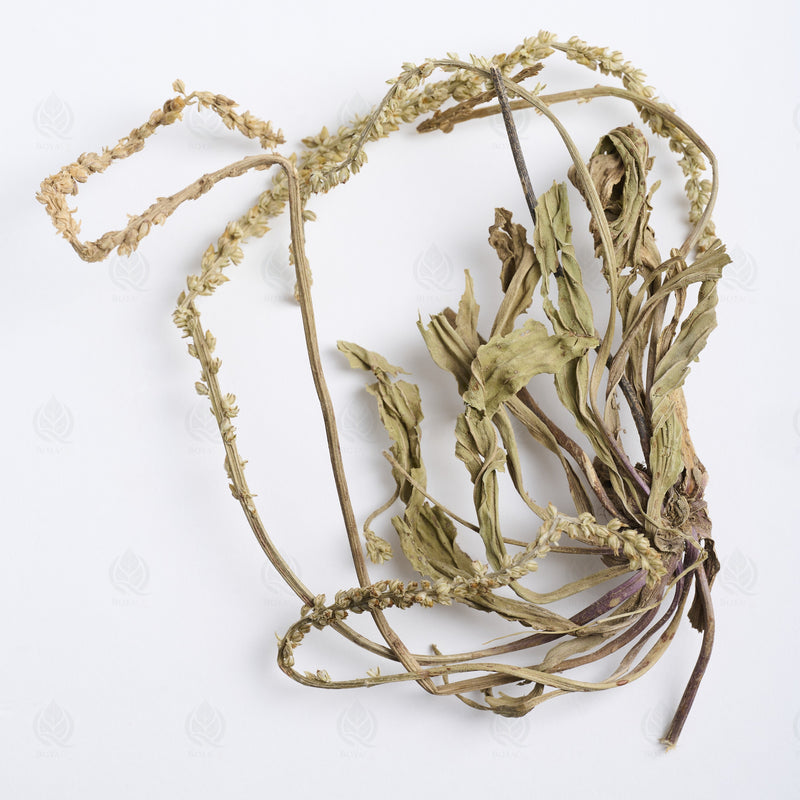
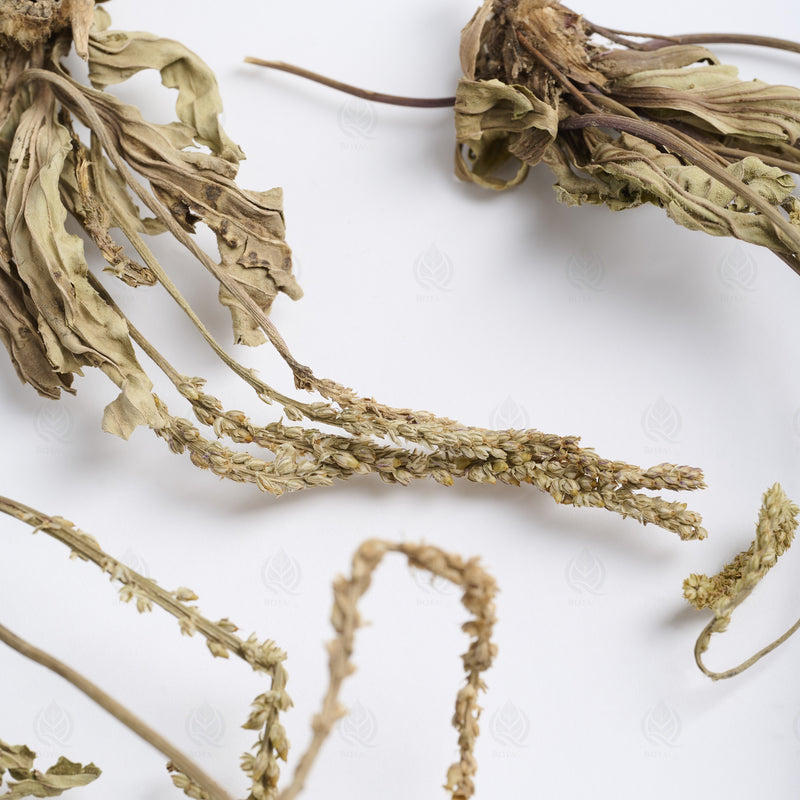

Greater plantain (aerial parts)
车前草 · Che Qian Cao
5,67 €

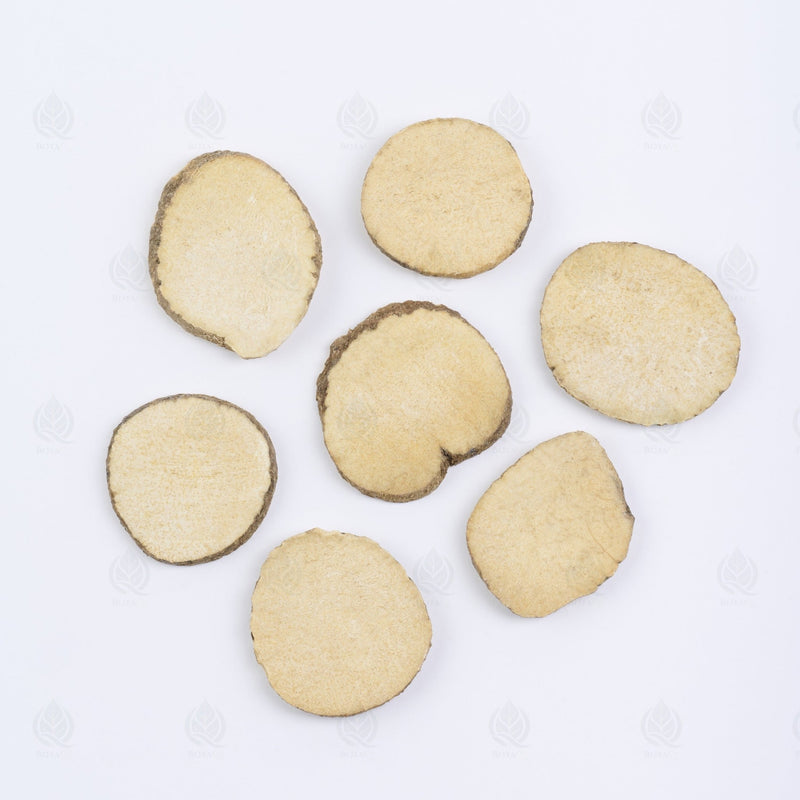

Water plantain
泽泻 · Ze Xie
5,67 €